Student moving guides

Moving Out of Sheavyn House

Sorting a shared kitchen can take longer than packing a bedroom. Make ownership, labelling and your next address clear before the van arrives.

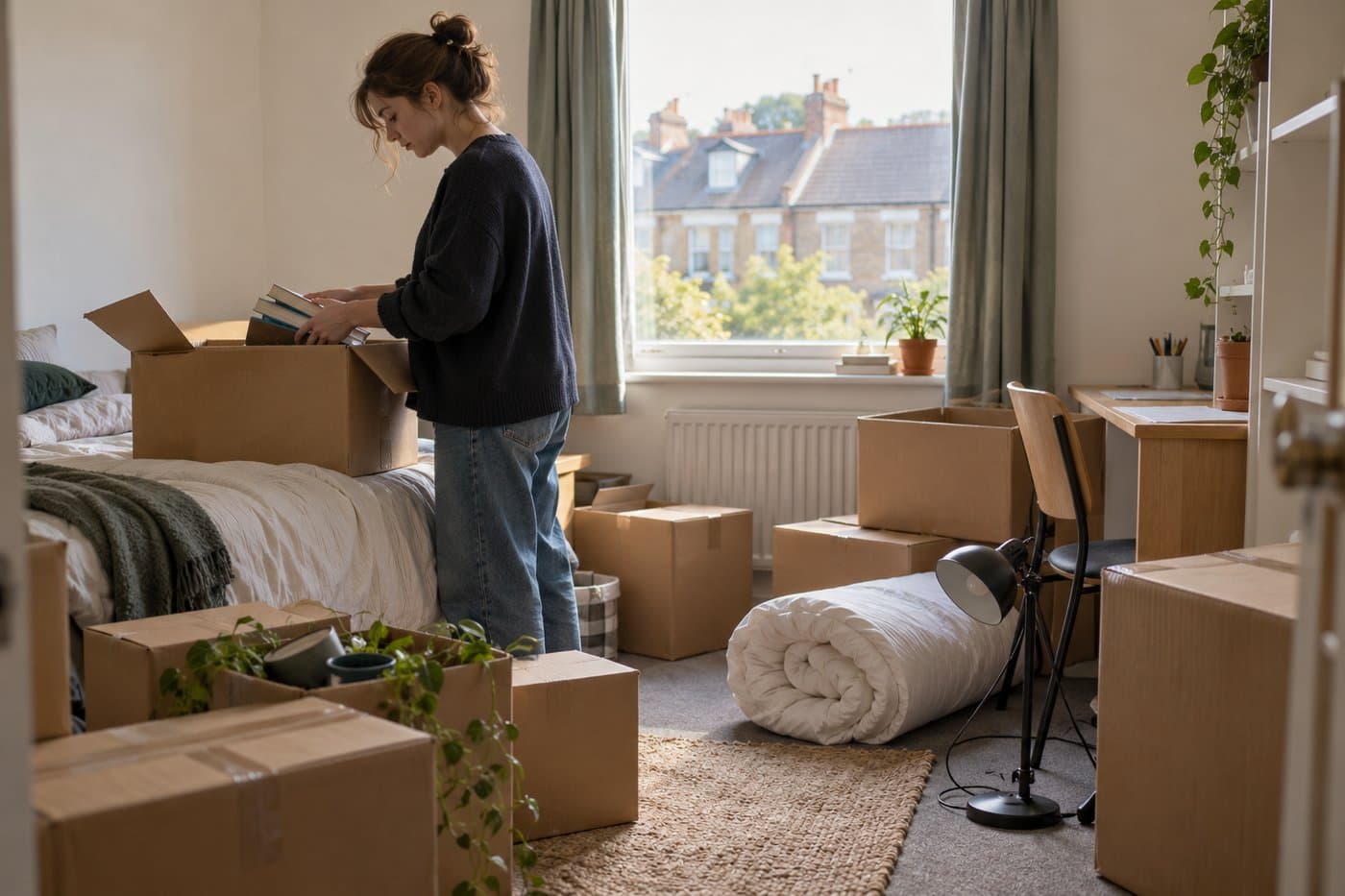
A person standing among packed and open cardboard moving boxes
Generated illustration. It does not show a named hall or a real customer.

Your bedroom may look nearly packed while half your belongings are still in the kitchen, freezer, laundry area or another person’s cupboard. A move from Sheavyn House goes more smoothly when you count everything you own, not just the things visible beside your bed.

The aim is to create one clear, manageable load and a confirmed destination for it. Our student moving service can then be quoted around the belongings and help you need, rather than a last-minute estimate of what might be left.

Make the shared kitchen part of the plan

The university’s Sheavyn House profile describes flats with nine to eleven bedrooms. In a shared household, it is worth agreeing who owns what before packing begins.

Walk through the kitchen with your flatmates and identify personal belongings, shared purchases and anything supplied with the flat. Check the contents of cupboards and drawers, not only the worktops. If something was bought together, agree its future instead of assuming the last person leaving will deal with it.

Keep this discussion practical. A short message listing the kettle, pan set or drying rack is easier to settle than a vague request for everyone to “sort their stuff”. Return borrowed items before they are accidentally packed.

Use a five-part sorting system

GroupWhat happens next
Moving with youPack, label and add to the transport inventory.
Going to someone elseArrange an agreed handover before departure.
Suitable for donationCheck an organisation’s acceptance rules and collection arrangements.
Recycling or disposalFollow the residence’s instructions and use the correct facilities.
Staying with the propertyLeave it in the condition and location required by the inventory.

Finish the donation or handover arrangements before the moving day. A bag marked “charity” still needs somewhere confirmed to go. Do not include unwanted possessions in the van on the assumption the driver will dispose of them.

Give kitchen items enough packing time

Wash and dry anything you intend to keep. Wrap plates, glasses and mugs individually, using a sturdy box and enough padding to prevent movement. Put heavier pieces at the bottom without creating a box that is difficult to lift.

Seal dry ingredients securely if you are taking them. Avoid putting food beside documents, clothing or electronics. Plan meals before leaving so you are not left trying to transport a freezer full of food. Check any storage provider’s rules before packing consumables for a longer stay.

Keep one small cleaning kit available until the room and your agreed shared areas have been dealt with. Remember to include that kit in your final check. It is easy to pack the mop early and find that the area beneath your boxes still needs attention.

A person organising cardboard boxes on the floor while packing
Generated illustration. It does not show a named hall or a real customer.

Choose one destination or clearly label several

If you are moving straight into a shared house, confirm key collection and which room is yours. Ask whether anyone else will be unloading at the same time. That conversation can prevent two collections arriving together with nobody available to organise the space.

If part of the load is going home, mark those boxes separately. Our university moving-home guide helps with planning that journey. For belongings waiting for the next address, arrange your unit and then book student storage transport. Frank’s moves the load; you arrange the storage space.

A different destination means more information for the quote. List every stop and what must be delivered there. Do not add a drop-off informally on the day, because it can change the route, loading order and time required.

Ask the right access questions

The university’s reception information groups Sheavyn House with Ashburne Hall. That identifies the administrative contact point; it does not establish the loading point for your departure.

Ask for current collection instructions, then send the mover your exact block, flat, room and floor. Confirm where the van may stop, whether its registration is required and how you should meet the driver. Explain any stairs, awkward turns or longer carrying distances that you have established.

Check the same details at the destination. For a broader checklist covering both ends, see our University of Manchester removals guide.

Finish with a full-room and shared-space check

Work through the room in a set order: wardrobe, drawers, shelves, under the bed, behind the door and any bathroom storage. Then check the places outside your room where you have kept belongings. Include laundry, bicycles and items lent to friends in your list.

Take appropriate dated photographs after clearing the space and follow your departure instructions for returning keys. Keep your identification, phone and essential medication with you. A finished move means your own possessions are accounted for and the remaining shared items have an agreed owner, rather than an unanswered message in the flat chat.

Sources and useful links

Plan your student move

Tell us your collection hall, destination, moving date, floor and what needs moving. We can then quote for the transport and loading help you need.

Get a student moving quote

GOOD TO KNOW

A few useful answers.

Is Sheavyn House reception the place where the van should collect my boxes?

Not necessarily. Confirm the permitted departure loading point with the residence. Give the mover those instructions along with your exact block, flat, room and floor.

Can I move with a flatmate?

You can request a combined quote. Provide both inventories and all destinations, then agree a shared packing deadline and clear labels for each person’s belongings.

What should happen to things bought jointly for the kitchen?

Agree ownership or another arrangement with the people who paid for them before packing. Do not remove another person’s belongings or leave the decision until collection time.

Can I leave unwanted items for the next residents?

Follow the residence’s instructions and obtain permission for any agreed handover. A useful item still needs an authorised destination; leaving it behind is not the same as arranging a donation.

How do I stop home and storage boxes getting mixed up?

Use large destination labels on the top and a side of every box, and keep the groups separate before collection. Give the mover an inventory showing which items go to each address.

FRANK’S VAN AND MAN MANCHESTER

Need a hand with your student move?

A few things or the whole lot. Tell us the plan.

CallGet a Quote