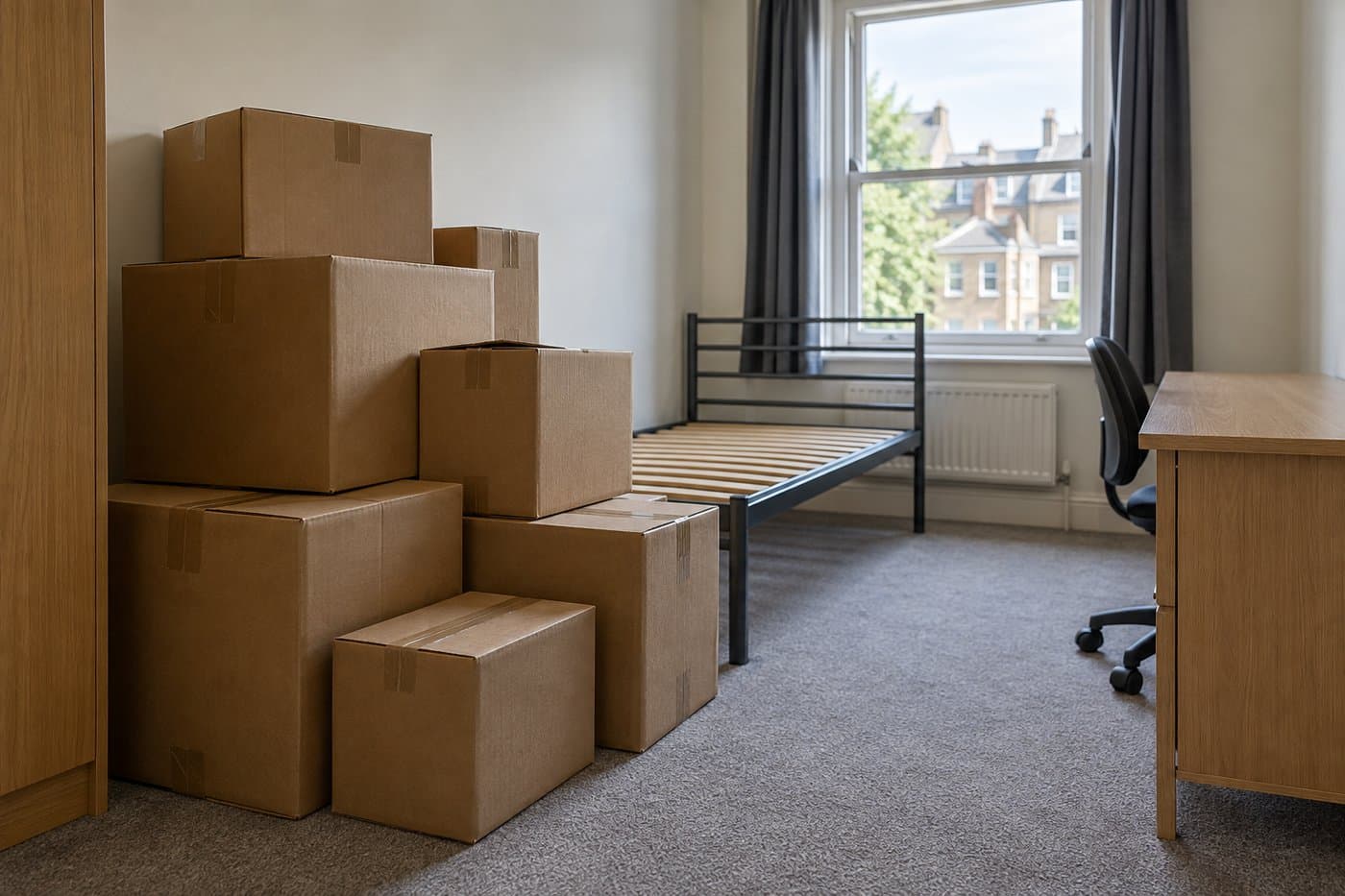
Moving out of Dalton-Ellis Hall does not need to consume your final week at university. The useful approach is to split the job into things you can decide early, things you can pack gradually and a small set of tasks that genuinely need to wait until the last day.
Start with the departure deadline and next address. Then make the transport plan fit around your actual commitments. Our end-of-term moving guide is useful if packing is competing with coursework, work shifts or travel arrangements.
Identify the block and the route out
The official Dalton-Ellis profile describes several blocks and room types. Tell your mover which block and floor you occupy, rather than assuming the hall name alone describes the job.
Walk the route from your door to the residence’s permitted collection point. Note stairs, doors and any awkward turns. Ask about access arrangements you cannot confirm yourself, including whether a lift may be used for belongings. An access feature in another block does not establish what is available for your room.
Give the same information for the destination. If you are going to a house, ask about its entrance and stairs. If a parent or friend is receiving the load, make sure they know the agreed delivery arrangements and can be contacted.
Deal with decisions before boxes
Deciding what to keep is often slower than packing it. Sort out borrowed books, shared purchases and anything you intend to sell or give away before you start sealing boxes. Arrange actual handovers rather than adding those jobs to your departure morning.
Check what the next room contains before moving furniture or buying replacements. Keep supplied furniture at the hall according to your inventory. For personal furniture you are taking, send photographs and measurements when requesting a quote.
The university publishes licence agreement dates, but your own agreement and departure instructions should be beside you while planning. Record the checkout time as well as the date, and leave space after loading for the room handover.
Use a packing plan that protects study time
| When | Useful job |
|---|---|
| As soon as the next address is known | Check access dates and decide whether storage is needed. |
| Before the busiest study period | Sort belongings and request an accurate transport quote. |
| In short packing sessions | Box unused clothes, spare bedding and books you no longer need. |
| After the last use | Pack course equipment and electronics with their cables. |
| The evening before | Finish labels and keep essentials in a separate bag. |
| After collection | Check, clean, photograph and complete the key handover. |
Use realistic sessions rather than assuming you will pack an entire room after an exhausting day. A clearly labelled box finished early is one less decision later. Keep the resources needed for your next deadline accessible until they are no longer required.